Tulsa, OK - 24/7 Emergency Service
Why Moisture Readings Matter More Than Visual Drying
Your floor looks dry. Your walls feel dry. The carpet is not squishy. Everything appears normal. It is not. What you are seeing is surface drying, the outermost layer releasing moisture into room air. In Tulsa's humid climate, this can occur within 24 to 48 hours after equipment starts. The room looks recovered. The temptation to pull equipment and get back to normal is strong. But behind the drywall, where the gypsum core is still elevated. Under the LVP, where the slab is still releasing moisture. Inside the carpet pad, where the center is saturated even as the face feels dry. At every point your eyes and hands cannot reach, moisture persists at levels supporting mold growth, deterioration, and long-term damage.
These guides follow the same process used on Tulsa jobs: stop the source, extract, dry to measured goals, and document everything.
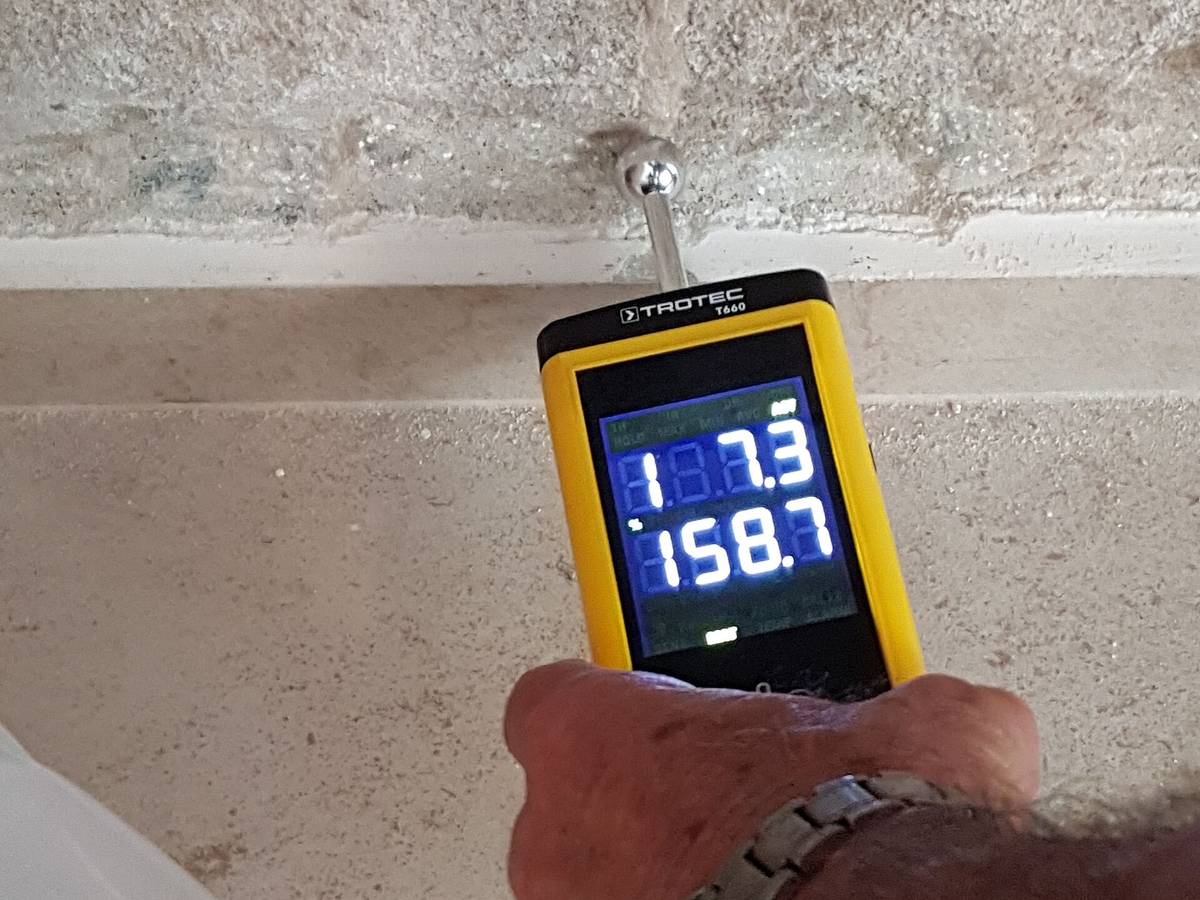
The Gap Between Looking Dry and Being Dry
Drywall. Painted drywall can feel completely dry while the gypsum core and paper backing remain elevated. The paint acts as a partial vapor barrier, slowing release from the room-facing surface while the back side stays wet. A penetrating meter reads the actual moisture content. The dry standard is typically below 1%. A reading of 15% in drywall that looks dry means the wall cavity is not ready to be closed.
Carpet pad. Carpet face sheds water quickly. The pad holds moisture tenaciously. A saturated pad can feel dry on top within a day while the core retains significant moisture and the slab beneath is also wet.
Concrete. Slab surfaces and basement walls feel dry to the touch while retaining elevated moisture within their mass. A slab wetted by a supply line break may take a week or more for internal moisture to stabilize. Installing flooring on concrete that has not been verified dry leads to adhesive failure, vapor transmission, and mold at the interface.
Wood framing. Studs, bottom plates, and top plates inside wall cavities absorb water and release it into the enclosed cavity air. The cavity may reach high humidity while drywall on both sides feels dry.

What Readings Tell You That Your Senses Cannot
Whether drying is progressing. Daily comparisons show whether levels are trending downward. A static reading means the drying setup needs adjustment.
Whether drying is complete. The dry standard is not a fixed number, it is a comparison to a dry reference from unaffected material of the same type in the same building.
Whether concealed areas match exposed areas. A wall dry on the surface may have an elevated cavity. Flooring dry on top may have a wet subfloor beneath.

In Tulsa, This Matters More
Tulsa's humidity means the gap between visual drying and actual drying is wider and more dangerous than in dry climates. Materials that look dry are more likely to retain concealed moisture because the humid ambient air prevents the natural evaporation that would produce visible indicators in drier conditions.
The materials look fine. Feel fine. Smell fine. But the readings say 18% in the drywall and 75% relative humidity in the wall cavity, conditions that will grow mold within days.
Trust the readings. Not the senses. Not the calendar. Not the desire to be done.
→ Moisture Mapping | → Structural Drying | → Dehumidification
Reading about it is step one. Drying is step two.
If this article describes your house right now, call (918) 578-1166. We extract, dry, and document the loss, and the record we build is the one your insurer will ask for.
More From the Tulsa Water Damage Blog
Back to the Tulsa water damage blog index, the water damage restoration Tulsa OK home page, or emergency water damage restoration if water is active right now.
One call starts extraction and drying.
Talk to a Tulsa dispatcher now. You will get clear next steps and documentation from the first visit.